Southbank Centre rubbish recycling and donation guide
Posted on 02/09/2026
If you are planning a visit, running an event, or just trying to clear up after a busy day around the Southbank, rubbish has a way of appearing faster than you expect. Cups, takeaway packaging, event leaflets, broken bits of display material, forgotten jackets, and the odd bulky item can all pile up. That is where a clear Southbank Centre rubbish recycling and donation guide becomes genuinely useful. It helps you sort what can be recycled, what should be donated, and what needs proper disposal without turning the whole thing into a headache.
The tricky bit is that Southbank is busy, public, and constantly in motion. What works at home does not always work here. You need fast decisions, a bit of common sense, and a plan that respects the space, the people using it, and the practical limits of London waste handling. This guide walks through that in plain English, with enough detail to be useful whether you are a visitor, a venue organiser, or someone nearby who simply wants to do the right thing.
If you also need broader support for clearing mixed waste in the area, the general advice in our recycling and sustainability guidance can help you think through greener disposal choices. And if your clean-up is bigger than a bin bag or two, it may be worth looking at our wider services overview before you decide what to do next.

Why Southbank Centre rubbish recycling and donation guide Matters
Southbank is not a place where waste stays still for long. Footfall is heavy, spaces are shared, and the rhythm changes from morning coffee runs to afternoon visitors and evening performances. That makes waste management feel small at first, but it quickly becomes a real issue. One overflowing bag, one missed recycling opportunity, or one box of still-useful items thrown away in a rush can create mess, extra cost, and avoidable waste.
A good guide matters because it helps people make better decisions under pressure. At events, for example, the most useful question is not only "Where does this go?" but "Can this be reused, donated, or kept out of general waste altogether?" That small shift is where better outcomes start. To be fair, most people are happy to do the right thing; they just need the decision tree to be obvious.
It also matters because public spaces carry an expectation of care. The South Bank has a strong cultural identity, and waste left behind affects how the area feels. A tidy entrance, a clear route, and bins that are used properly all make a difference. Nobody wants to step around a half-crushed coffee cup on the way to a show. Simple as that.
Expert summary: the best waste outcome around Southbank is usually the simplest one that keeps usable items in circulation, recyclable materials in the correct stream, and residual rubbish out of shared public spaces.
For people handling larger clear-outs in nearby Waterloo, it can also help to think in terms of the whole property or venue rather than one room at a time. If that sounds familiar, our house clearance Waterloo page gives a good sense of how mixed items are typically handled in a structured way.
How Southbank Centre rubbish recycling and donation guide Works
The process is straightforward once you break it into categories. First, separate what can be reused. Then identify recyclables. After that, deal with anything contaminated, broken, or unsuitable for donation. That order matters because it prevents useful items from being dragged into the wrong pile just because they were seen last.
In practical terms, the workflow usually looks like this:
- Sort reusable items first. Clean, complete, and safe items should be considered for donation or redistribution before anything else.
- Separate clean recyclables. Cardboard, certain plastics, metals, and glass may be suitable depending on local collection rules and the item's condition.
- Isolate residual waste. Anything contaminated, broken beyond use, or not accepted in recycling should be kept separate.
- Check for bulky items. Furniture, display stands, broken seating, and large props usually need a dedicated removal route.
- Arrange collection or drop-off. The final step is making sure the items leave the site responsibly, without adding clutter to walkways or loading areas.
The "donation" part is often the most overlooked. A lot of things that look like rubbish at first glance are still useful: clean coats, unopened stationery, sealed event supplies, and decent furniture can often be passed on. The key is condition. If an item is stained, damaged, unsafe, or missing essential parts, donation usually stops making sense pretty quickly.
There is also a difference between everyday visitor waste and event waste. Visitor waste tends to be small and mixed. Event waste can be more complicated, especially when it includes packaging from deliveries, temporary signage, catering leftovers, and hired materials. If your situation leans toward event-related clearance, a broader service like junk removal Waterloo may be more relevant than a simple bag-by-bag tidy-up.
Key Benefits and Practical Advantages
Doing this properly is not just about being tidy. There are real practical gains.
- Less landfill waste: Recycling and donating reduce the amount sent to general disposal.
- Cleaner shared spaces: Better sorting means less overflow and fewer loose items left around entrances or seating areas.
- Lower handling stress: Staff and organisers spend less time guessing where things belong.
- Better use of resources: Usable items are kept in circulation instead of being discarded early.
- Improved public image: A neat space feels calmer and more professional, especially in a cultural venue.
There is also a quieter benefit: it makes people more thoughtful. Once you start looking at waste as "reusable, recyclable, or residual," you notice how much can be diverted. It's a tiny mindset change, but it sticks. And yes, sometimes that means staring at a pile of cardboard and feeling mildly proud of yourself. Fair enough.
For businesses and organisers working nearby, a smarter waste setup can also reduce the number of ad hoc clearances. If you regularly manage mixed materials, our waste removal Waterloo page may be useful when you need a more structured approach.
Who This Is For and When It Makes Sense
This guide is useful for several kinds of people, and honestly, most of them are juggling more than they would like.
- Event organisers dealing with post-event clear-up, leftover catering materials, or temporary installations.
- Venue teams sorting day-to-day rubbish and trying to keep recycling streams clean.
- Local businesses clearing old stock, promotional materials, or office equipment after an activation.
- Nearby residents who want to donate usable items before a move, refurb, or declutter.
- Contractors and suppliers handling packaging, offcuts, or short-term site waste.
It makes sense whenever waste is mixed, time is short, or the items involved still have some life left in them. A box of clean brochures is not the same thing as food-soiled packaging. A decent chair is not the same as a broken one with a missing leg. The whole point is to slow down just enough to separate those differences.
If the task extends beyond one room or one load, larger clearance services can help keep the process manageable. For example, if you are dealing with furniture, see our furniture disposal Waterloo page, or if the work involves a more comprehensive property clear-out, have a look at loft clearance Waterloo for a sense of how larger jobs are approached.
Step-by-Step Guidance
Here is the practical version. Nothing fancy, just a sequence that works in real life.
- Walk the site first. Before lifting anything, identify what is actually there. You will save time by grouping items properly from the start.
- Create three clear piles. Reuse or donate, recycle, and rubbish. Keep them physically separate if you can.
- Check condition quickly. Ask: is it clean, complete, and safe enough for someone else to use?
- Remove contamination. Food residue, wet packaging, mixed liquids, and damaged items often rule out recycling or donation.
- Flatten and bundle where sensible. Cardboard and similar materials are easier to handle when compact.
- Label anything uncertain. If an item might be recyclable or suitable for donation, keep it aside rather than guessing.
- Book the right disposal route. For bulky or mixed loads, choose a collection method that matches the waste type.
- Do a final sweep. Check under tables, behind screens, and in delivery corners. That is usually where the forgotten bits hide.
A small but useful habit: keep a separate "decision box." Put unclear items in it, then review them at the end instead of tossing them quickly. It sounds basic, but it prevents a lot of avoidable waste.
If your waste is mostly packed-up event material or an awkward mix of items, our rubbish clearance Waterloo page may be a better fit than trying to manage everything in-house.
Expert Tips for Better Results
In our experience, the cleanest clear-ups happen before the rubbish appears, not after. That sounds obvious, but it is often the bit people skip.
- Set up bins before the rush. Put recycling and general waste in obvious places, especially near exits and refreshment areas.
- Use simple labels. People are far more likely to sort correctly if the instructions are short and visual.
- Keep donation items dry. A perfectly good item can become useless if it gets damp or smeared with food.
- Protect reusable stock during breakdown. Donation-worthy materials should be boxed separately, not dumped in the last available bag.
- Plan for peak moments. After a performance or event finish, waste spikes fast. That is when sorting systems get tested.
One thing people often underestimate is how much cleaner the process becomes with a little staging. A pallet for cardboard, a crate for donation items, and one clearly marked bag for residual waste can save ages later. Not glamorous, but effective.
If you are working around the station or moving waste in a commuter-heavy part of the area, timing matters too. Our Waterloo station rubbish collection for commuters article is a helpful companion read for thinking about pressure points, peak times, and how messy a few minutes can become in a crowded setting.
Common Mistakes to Avoid
Most waste problems come from a handful of predictable slip-ups. None of them are dramatic, but together they create avoidable mess.
- Putting everything in one bag. Once recyclable and reusable items are mixed with food waste, they are often lost to the residual stream.
- Donating poor-condition items. If it is broken, stained, or incomplete, donation can create more work for the receiving organisation.
- Ignoring bulky items. Large chairs, shelving, and display units need a plan, not just goodwill.
- Leaving sorting until the end. By then, people are tired and the fastest decision usually wins, which is rarely the best one.
- Forgetting the hidden waste. Cables, battery packs, fixings, and packaging inserts are easy to miss.
Another common issue is overestimating what is "obviously recyclable." Packaging looks recyclable until it is coated in sauce, mixed with film, or wet from the weather. At that point, the answer often changes. That is just how it goes.
And if you are clearing out a workspace or temporary office set-up after an activation, office clearance Waterloo can be a practical option when there is more than standard bin waste to handle.
Tools, Resources and Recommendations
You do not need a complicated setup. A few simple tools make a big difference.
| Item | Why it helps | Best use |
|---|---|---|
| Clearly labelled bags or boxes | Makes sorting fast and reduces mistakes | Recycling, donation, residual waste |
| Marker pens and tape | Keeps categories obvious during busy clear-ups | Temporary events and back-of-house sorting |
| Reusable crates | Protects donation items from damage | Clean stock, clothing, stationery, small equipment |
| Trolley or sack truck | Safer for moving heavier items | Bulky waste and mixed loading areas |
| Checklist sheet | Stops items being forgotten | End-of-day sweep and handover |
For larger jobs, the real "tool" is often coordination. A shared checklist between the venue team, caterers, and cleaners can prevent waste from being moved twice. That's one of those unglamorous improvements that pays off quietly.
If you are comparing disposal options for a mixed load, you may also want to review skip hire Waterloo for bulk disposal and rubbish collection Waterloo if you prefer a more direct collection service. Different jobs suit different methods. No need to force a square peg through a round hole.
Law, Compliance, Standards, or Best Practice
This area sits within normal UK waste handling expectations, so the safest approach is to stay conservative and follow accepted best practice. In plain terms: separate waste responsibly, avoid fly-tipping, and make sure anything handed over for reuse or donation is genuinely suitable.
For business and event settings, a few common-sense principles matter:
- Do not mix hazardous materials with everyday waste unless you are using an appropriate specialist route.
- Keep duty of care in mind. If you are handing waste to another party, you want confidence it will be managed properly.
- Avoid contamination. A recyclable stream is only useful if the items placed in it are acceptable and reasonably clean.
- Store waste safely. Bags, boxes, and bulky items should not block exits, walkways, or access points.
Donation also needs care. It is best practice to donate only items that are clean, safe, complete, and likely to be useful. If you would be embarrassed to hand it to someone face to face, that is usually a clue. Slightly blunt, but helpful.
For readers who want to understand how our business approaches responsible handling more broadly, our about us page and insurance and safety information are useful background reading. If you want to know more about the standards behind our environmental approach, our recycling and sustainability page explains the thinking in straightforward terms.
Options, Methods, or Comparison Table
There is no single correct method for every Southbank clean-up. The right choice depends on volume, time, item condition, and whether anything can be reused.
| Method | Best for | Pros | Watch-outs |
|---|---|---|---|
| On-site sorting | Small to medium waste piles | Fast, cheap, keeps donation opportunities visible | Needs discipline and space |
| Donation-first separation | Clean reusable items | Best for sustainability, reduces waste | Only works if items are genuinely usable |
| Recycling-only bagging | Clean, dry recyclable material | Simple and efficient | Contamination can spoil the batch |
| Bulky collection | Furniture, fixtures, awkward items | Handles heavy loads cleanly | Needs planning and access |
| Mixed waste clearance | Complex clear-outs | Convenient for busy sites | Less efficient if reusable items are not separated first |
In practice, the best results often come from combining methods. For example, a venue may sort donation items first, recycle clean cardboard and packaging separately, and then use a collection route for the residual waste. That mix is usually more realistic than forcing everything into one system.
Case Study or Real-World Example
Imagine a small cultural event finishes late on a Friday evening. The team is tired, the venue is noisy, and there are tables to clear, signage to pack away, and catering waste everywhere. Some items are clearly rubbish. Others are not so obvious: unused notebooks, spare promotional lanyards, a stack of clean printed programmes, and several sturdy folding boxes.
At first glance, it all looks like one job. But once the team pauses for ten minutes, the picture changes. The programmes can be stored or passed on. The lanyards can be reused for the next event. The boxes can be flattened for recycling. The food waste and dirty disposables go separately. A damaged chair goes into bulky waste. Suddenly the load becomes much easier to manage, and the venue is not burying useful materials in general rubbish.
That sort of situation happens all the time. Not always dramatic, not always neat. But once people get used to sorting in that order, the whole process speeds up. And yes, somebody usually says, "Why didn't we do this earlier?"
If the example sounds close to your own situation and you need help with the physical removal side, our contact page is the best place to start a conversation about what the job involves.
Practical Checklist
Use this simple checklist before you call the waste "done":
- Have reusable items been separated first?
- Are recyclables clean and dry enough for the correct stream?
- Have food-soiled or contaminated items been kept out of recycling?
- Are bulky items identified and grouped safely?
- Has anything hazardous been set aside for specialist handling?
- Are bags, boxes, and crates labelled clearly?
- Have you checked hidden corners, under tables, and behind temporary displays?
- Is the donation pile genuinely useful, complete, and presentable?
- Have walkways, doors, and exits stayed clear during the process?
- Do you have a final collection plan for the residual waste?
If you can tick most of those off, you are already doing better than a lot of rushed clear-ups. Honestly, that last sweep is where the good jobs happen.
Conclusion
A thoughtful Southbank Centre rubbish recycling and donation guide is really about making better decisions under pressure. Keep reusable items out of the waste stream, separate clean recyclables, and treat residual rubbish as the final step rather than the first one. That approach protects the space, reduces avoidable waste, and makes the whole process calmer for everyone involved.
Whether you are handling a small tidy-up or a more complicated clear-out, the same principle holds: sort early, label clearly, and remove waste in the right order. That is how you avoid the messy middle, which is usually where jobs go sideways.
If you need support with a larger clearance, a mixed load, or a deadline that is starting to feel a bit too real, there is nothing wrong with getting practical help. Sometimes that is the difference between a rushed after-hours scramble and a clean finish that feels properly under control.
Get a free quote today and see how much you can save.
And if you are standing there looking at one last pile and wondering whether it is rubbish, recycling, or a donation item, take a breath. You are probably closer to a tidy finish than you think.



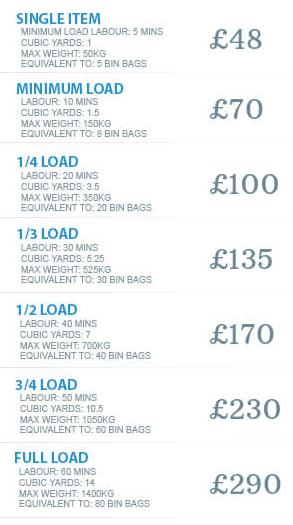
 Tipper Van - Rubbish Removal and Commercial Clearance Prices in Waterloo, SE1
 Luton Van - Rubbish Removal and Commercial Clearance Prices in Waterloo, SE1